
What to do when your meeting room floor is being replaced
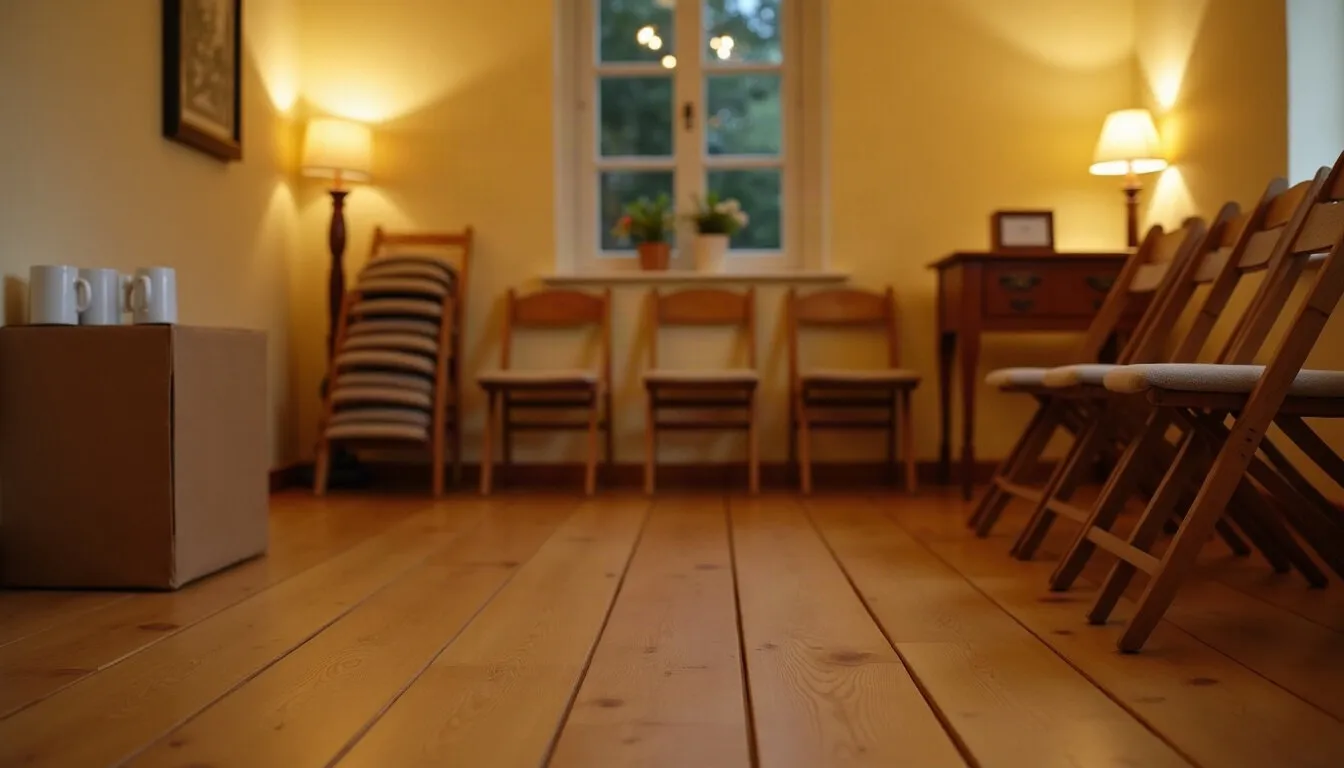
The announcement slot is ten minutes after coffee. You have a sheet of paper folded in your pocket and one piece of news: the hall floor is being replaced, and for a few weeks the group will meet somewhere else. Somebody in the second row tripped on that curling corner by the kitchen hatch last month. Everybody knows the floor needs doing.
They still won't like hearing it. If your committee is in Colorado, local pages for vinyl floor installation in Aurora are a sensible place to read what the job involves before anyone talks about dates. This piece is about the other half of the work: how to tell your people, in under two minutes, so they turn up at the right door next week.
Why floor news lands badly
People don't hear "new floor." They hear "change." The group has a routine: the same room, the same chairs, the same spot by the radiator. Any announcement that touches the room touches the routine, and the routine is part of why people come.
There's a second reason. Floor work is mostly invisible until it's finished. Nobody pictures the old covering coming up, the subfloor being checked, the room sitting empty while things settle. So a temporary move sounds bigger than it is, and people fill the gap with guesses. "Are they closing the hall?" "Is this about money?" "Will we ever get our room back?"
The answer to all three is in your announcement, if you write it well. Short, specific and calm beats long and apologetic every time.
What to set up beforehand
You can't announce what you don't know. Before you stand up, get five facts nailed down with whoever is running the project on the committee side.
- The dates. The last night in the usual room and the first night back. If the return date is uncertain, say "the week of" rather than a specific night.
- The temporary room. Where it is, which door to use, where to park, and whether it has the things your group relies on (a kitchen, a step-free entrance, enough chairs).
- Who to contact. One name, one way to reach them. Not three committee members who each know a bit.
- What happens to your stuff. The cupboard of mugs, the box of name badges, the spare reading glasses. Will it move, stay boxed, or need someone to collect it?
- The reason, in one line. Something like "the old floor is worn and uneven, and it's become a trip hazard." People accept change better when they can see the point of it.
It also helps to know a little about the work itself, so you can answer the obvious follow-up without guessing. A good flooring company will usually explain how long the room needs to be empty, whether furniture has to come out first and when the room can be used again. Ask the committee contact to pass those answers on to you, in plain words, before the announcement night. If a detail isn't settled, say so. "We don't know yet, and I'll tell you as soon as we do" is a complete answer.
Finally, think about the temporary room as a speaker. Is it bigger, smaller, echoey? A room with a hard floor and bare walls carries voices differently from a carpeted lounge. If you'll be doing announcements there for a few weeks, stand in it once beforehand and say a sentence out loud from the front. You'll know in five seconds whether you need to stand closer to people.
What to say
Here's the order I'd use. Good news first, then the logistics, then the one thing you need from them.
- Open with the improvement, not the inconvenience.
- Give the dates and the temporary room.
- Say who to contact.
- Ask for one small thing (help packing, or a lift for someone).
- Stop.
That last step is the hard one. Once the logistics are out, every extra sentence makes the news sound worse. Resist the urge to apologize three times or explain the committee's whole decision.
Say it like this
Good news first: our hall is getting a new floor, so no more tripping by the kitchen hatch.
That means for the next few weeks we'll meet in the small room across the parking lot, starting next Tuesday at the usual time. Use the side door, it's step-free.
If you have anything stored in the hall cupboard, could you take it home by Sunday? And if you can give someone a lift, let me know tonight.
Read it out loud before the night. If you run out of breath on a line, split it. If a word feels stiff in your mouth, swap it for the one you'd use with a neighbor. Then put the paper away. You know what it says. Speaking without the page in hand makes you look at people, and people trust news more when the person telling them is looking at them.
On the night
The room you're announcing in still has the old floor, so pick your spot with that in mind. Stand where the floor is sound and where everyone can see you, not at the far end by the curling corner.
Wait for the room to settle. A two-second pause after people stop talking does more than raising your voice. Then say it once, clearly, at an easy pace.
After the announcement, expect a small cluster of people to come up to you with the same handful of worries. Have the answers ready in your head:
| What people worry about | What you can say |
|---|---|
| "Is the group stopping?" | No, same night, same time, different room. |
| "How do I get to the new room?" | Side door, step-free, parking is in the usual spot. |
| "What about my things in the cupboard?" | Take them home by Sunday, or tell me and I'll box them. |
| "When are we back?" | The week of the date we were given; I'll confirm it. |
| "Can I help?" | Yes, packing on Saturday morning, an hour at most. |
Keep the table on your phone or a card in your pocket. You won't need to look at it, but knowing it's there keeps you calm.
If one person is clearly upset, don't try to fix it in front of the group. Thank them, say you'll catch them after, and do. Often the worry is about something specific (a mobility issue, a lift, a favorite chair), and it's easy to sort once you know what it is.
Following up afterwards
An announcement said once is an announcement half heard. Some people were in the kitchen. Some were late. Some were thinking about their own week.
Send the same message in the group chat that evening, word for word. People like seeing exactly what was said, and it settles any "I heard it was…" versions before they spread.
Two days before the first night in the temporary room, send a short reminder: the room, the door, the time. On the night itself, put someone at the old door for the first ten minutes to redirect anyone who forgot. That person is doing the most useful job of the evening.
When the work is finished, make a second, shorter announcement: the date you're back, and anything that's changed (the cupboard has moved, the chairs are stacked differently, the floor will be quieter underfoot). If anyone wants to know what kind of floor went down and how to look after it, point them to the committee contact rather than guessing. Keep the announcement itself to three sentences. People will be glad to be home, and they'll see the rest for themselves.
Before your next team night
Write your floor announcement on one side of a card, read it out loud twice in an empty room, and cut every sentence that isn't a date, a place, a name or an ask.
Good news, told plainly, is usually the shortest thing anyone says all evening.